
Oopbuy Spreadsheet Guide: From Beginner to Expert
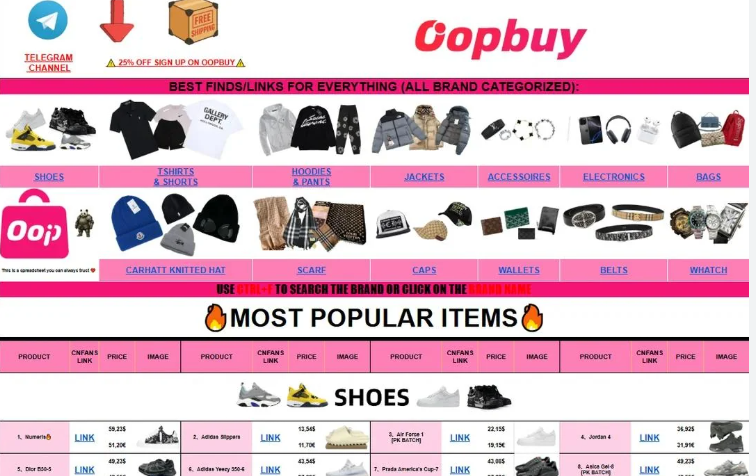
The Oopbuy Spreadsheet aggregates high-quality product resources from around the world, helping users quickly locate products that offer great value for money. It features product filtering and price comparison tools, making the shopping experience easier and smarter.
Oopbuy Spreadsheet Guide: From Beginner to Expert
In 2026, online shopping is no longer just about finding products—it’s about managing information efficiently. With thousands of listings appearing across global marketplaces every day, shoppers increasingly rely on structured tools to simplify decision-making. One of the most practical systems in this space is the Oopbuy Spreadsheet.
The Oopbuy Spreadsheet is a curated product organization method that transforms chaotic e-commerce data into a clean, searchable, and comparison-friendly format. Whether you are a beginner just discovering it or an advanced user optimizing your shopping strategy, this guide walks you from basic understanding to expert-level usage.
Beginner Level: Understanding the Basics
At its core, the Oopbuy Spreadsheet is a structured list of products arranged in rows and categories. Instead of browsing multiple websites, users access a single sheet containing curated product data.
What Beginners Will See:
Product names and categories
Prices from different sellers
Direct purchase links
Basic descriptions
Simple organization by type (fashion, tech, home goods, etc.)
Beginner Goal:
Learn how to navigate and interpret the spreadsheet without feeling overwhelmed.
At this stage, the key is not speed—it is familiarity. Users should focus on understanding how products are grouped and how to identify relevant listings.
Intermediate Level: Smarter Comparison and Filtering
Once you are comfortable with the layout, the next step is learning how to compare and evaluate products more effectively.
Key Skills at This Stage:
1. Cross-Product Comparison
Instead of looking at one item at a time, intermediate users compare:
Price differences
Seller variations
Product features or notes
2. Category Mastery
Users begin to focus on specific categories such as:
Streetwear and fashion
Electronics and gadgets
Lifestyle and accessories
3. Identifying Value Patterns
Experienced users start noticing patterns like:
Similar products with different pricing
Listings that appear frequently due to popularity
Items that offer better value than competitors
Intermediate Goal:
Reduce decision time while improving purchase accuracy.
Advanced Level: Strategic Shopping with Data Thinking
Advanced users treat the spreadsheet not just as a list—but as a decision-making system.
1. Trend Tracking
By observing repeated listings and updates, users can identify:
Popular products gaining demand
Seasonal shopping trends
Emerging “high-value” items
2. Price Timing Strategy
Instead of buying immediately, advanced users:
Monitor price fluctuations
Wait for better listing updates
Identify underpriced entries early
3. Multi-Source Validation
Experts never rely on a single row. They:
Cross-check multiple listings
Verify external marketplace data
Compare quality notes across entries
Advanced Goal:
Maximize value while minimizing risk and unnecessary spending.
Expert Level: Building a Personal Shopping System
At the expert stage, users evolve beyond consumption—they build systems.
1. Personalized Spreadsheet Logic
Experts often:
Create custom filters
Track preferred brands or categories
Highlight trusted sellers
2. Decision Frameworks
Instead of random buying, they apply rules like:
Only purchase after 2+ comparisons
Avoid listings without quality indicators
Set budget caps per category
3. Integration With External Tools
Some users combine the spreadsheet with:
Price tracking tools
Browser bookmarks
Personal budgeting systems
Expert Goal:
Turn shopping into a controlled, data-driven workflow instead of an emotional process.
Common Mistakes at Every Level
Even experienced users can fall into traps:
Trusting outdated spreadsheet versions
Ignoring missing or unclear product data
Overvaluing low prices without quality checks
Skipping comparison steps due to urgency
The key to mastering the system is consistency, not speed.
Why the Oopbuy Spreadsheet Model Works
The success of the Oopbuy system comes from a simple idea: structured information beats unorganized choice overload.
Instead of forcing users to rely on algorithmic recommendations or endless search results, it provides:
Clarity
Transparency
Direct comparison
Reduced cognitive load
This is why more shoppers are shifting toward spreadsheet-based systems in 2026.
From Beginner to Expert: The Real Transformation
The journey through the Oopbuy Spreadsheet is not just about learning a tool—it is about changing how you think about shopping.
Beginners learn navigation
Intermediate users learn comparison
Advanced users learn optimization
Experts build systems
Over time, shopping becomes less about impulse and more about strategy.
Final Thoughts
The Oopbuy Spreadsheet is more than a product list—it is a structured approach to modern online shopping. By progressing from beginner to expert level, users gain not only better deals but also better decision-making habits.
In a world where digital marketplaces are increasingly complex, mastering structured tools like this is becoming a real advantage. Those who learn to use it effectively don’t just shop more—they shop smarter.
oopbuy
Connecting users with factories for seamless shopping.
Secure
Quality
contact@cnfansfindsheet.com
13859788884
© 2025. All rights reserved.